Fearless Predictions for 2010 (part 2)

General 1 Comment »

So I'm watching the "Your Money" segment on CNN today, and like most of the 'news' channels this weekend, the focus is on predictions for 2010.

And who do they bring on?  A psychic. 

How perfect. 

That's about as good as advice you'll ever find on CNN or any of the other 'news' channels when it comes to investing and financial expertise.

In any case, it's time to look forward for 2010, and gaze into the crystal ball I received as a gift a couple of years ago (seriously – in fact it's one of the coolest gifts I've ever received, which was given to me by several students).

So let's fire the crystal ball up and see if I can do as well this year with my predictions as I did in 2009.  I'll try to keep my comments limited so I don't drag this post out longer than it needs to be.

U.S. & Canadian Economies
As a general comment, the two countries will see very different economic patterns.  The U.S. will continue to deal with signficant economic headwinds, and will likely have to continue and extend both the first time homebuyer's program that is due to expire in April, as well as additional stimulus and bailout programs (disguised as tax breaks and government guarantees).  The U.S. will continue to ramp up its offensive debt loads, which will continue to erode global faith in the strength of the U.S. economy and the U.S. dollar.

Canada, on the other hand, will continue its economic recovery and will become one of the leading economies in the G20, helped in part by the continuing recovery and growth of commodities.  Assuming the oil and gas prices continue to gain strength, I expect that Alberta will become the leading province again by the end of 2010, and will lead the country into 2011.

Interest Rates
People love obsessing over what's going to happen with interest rates.  The central banks continue to have the same challenge as last year — they want to raise rates to reduce the risk and likelihood of inflation, but they know that if they do, they'll likely crush any economic recovery.  There's a lot of talk these days about spiking interest rates and that we're going to see huge increases in 2010, but I'm projecting that we will see very little, if any, interest rate hikes in 2009, both in the U.S. and in Canada.

In the U.S., there's no doubt the general economic recovery is lethargic, and there are still some significant risks ahead that could cause the U.S. to go back into a recession.  It's extremely fragile right now, and the U.S. government is doing everything it can to prop up the economy and the consumer.  They absolutely CANNOT afford to raise interest rates, because that will have a very serious impact on the economy, which is highly sensitive to interest rates right now.  Higher rates will reduce consumer borrowing and spending, and slow the economy down even more.  So, my prediction is that the U.S. will see between zero and possibly up to 0.50% of an increase in 2010.  The only reason we'd see an increase is because of the Fed trying to scare Americans that they're going to jack rates up and to slow down inflation if it starts to rise sometime during the year.  But I'm guessing that won't happen and we'll see flat interest rates through the year.

In Canada, the economic recovery is well underway, to the extent that we're seeing a housing recovery unlike anyone would have predicted.  This is leading government leaders and industry experts to suggest we might be seeing the start of another real estate bubble.  The Finance Minister is threatening to raise rates and slow down the housing increases with additional restrictions, but DON'T believe it.  The Canadian government also cannot afford to raise rates significantly in 2010, because doing so will drive the Canadian dollar to the sky, which has its own set of economic consequences in Canada.  For 2010, I expect the Bank of Canada to increase interest rates no more than 0.50% in 2010, but you'll hear them scream and squawk all year long, trying to ensure Canadians don't get 'drunk' on all the cheap money floating around.

Gold
A truly odd investment, gold has risen more than triple over the past several years, and now has entrenched itself above $1,000.  Gold is strange, because as an investment it really hasn't performed well over the long term.  As I always say, you should look at gold as insurance, and not an investment.  Gold is the hedge against inflation (ie: it goes up when inflation goes up), so by investing in gold, what you're really doing is betting than inflation is going to rise in the future (hence, it's insurance against massive inflation).

We invested in physical gold in mid-2008, because we felt there might be a massive run of inflation with the weakening of the U.S. dollar.  We saw significant weakness, but the overall panic and fear that we saw in late 2008 and early 2009 has largely passed.  Therefore, in my view, the need for significant insurance against inflation has reduced significantly.  That's not to say we don't face the prospect of inflation going forward – only that the likelihood of hyper-inflation has gone done quite a bit.

The continuing economic challenges in the U.S. will drive demand for gold through 2010, and unless we see a lot more positive economic signs in the U.S. than I expect we will, I believe gold will trade in the $1,000 – $1,400 range throughout 2010.  I expect gold will spike when we see a correction in the stock market, and the widespread belief is that the U.S. is headed into a deeper economic hole — this fear will drive people into gold.  If a series of negative stories come out that create sufficient fear and anxiety, we may see gold reach the $1,600 level — but this is unlikely, unless serious economic problems surface beyond what the market is aware of right now.

Oil
Since hitting a low of approximately $35 a barrel in early 2009, oil has raced back and has been trading consistently in the $65-75 range for the latter half of 2009.  Going into 2010, inventories appear to be slowing reducing, and global demand (particularly in China and other areas of Asia) appear to be slowly coming back to life.  I believe the days of oil in the $30s and $40s are over, and had we not seen the economic tsunami we did in 2008/2009, oil would have never returned to those levels.

Going forward, for 2010 I see oil trading in the $75-100 range overall.  I believe it will dip down into the $60s early in 2010, and by the end of the year, we will have seen oil over $100, likely remaining close to that level when the end of the year comes.  

I also expect that the global warming story and momentum will lose some of its steam, because it's going to become more clear in 2010 that the science behind the global warming theory doesn't hold as much water as previously thought.  In other words, people are going to start debating the reliability of global warming and carbon emissions, and the energy sector will begin an aggressive campaign to show that it's not the evil empire that the environmentals want it to be portrayed as.

On a related note, my expectation for natural gas is that we'll see it relatively volatile again this year — trading betweeen $5.00 and $6.75 over the course of 2010.  There will be a major psychological threshold at $7 but if it does break $7, that will create significant optimism and expansion in Alberta once again.

The Stock Markets
Because of the massive declines suffered in 2008 and early 2009, the stock markets had significant gains in 2009 — the TSX (Canada's largest stock exchange) had the best year it's had since 1976.  The problem is, most investors missed the upside, because the decline leading up to it wiped them out, or scared them enough to take their money and run.

Incredibly, even after factoring in this recent increase in the market, an investment in the stock market over the last 10 years would have yielded you a return of .. zero.  That's right.  Overall, stock markets are exactly where they were when we entered this past decade.  Anyone who says 'buy and hold' works is an idiot and that's the proof!

In any case, the stock markets have been on a tear around the world in the last few months, and I believe we're going to see a significant correction, likely in and around the March timeframe.  Expect a 15-20% decline in the stock market this year, and tremendous volatility.  As for where it's going to finish, I believe we'll end the year very close to where we enter — so expect the stock market to gyrate up and down over the year, but not to make much progress overall.  The decline I expect we'll see early in the year will slowly be made back uip over the course of the year, but you'll be no further ahead a year from now.  Expect the TSX to do better than the Nasdaq and Dow Jones, driven by strong commodity prices.

U.S. Real Estate
I wish I had better news, but I expect continued problems in the U.S.  The foreclosure story is going to remain, especially since a lot of homeowners will not be able to obtain permanent modifications on their loans, and more people will walk away from their 'under water houses (where they owe more than it's worth).  2010 will mark the year when it becomes socially acceptable to default on a mortgage, and I expect that while price declines will slow down by the end of 2010, we'll continue to see slight decreases throughout the year.  We won't see a rebound or recovery in U.S. home prices until at least 2011, other than a few specific markets that are going to perform better than most other areas.  That's not to say you can't make money in this market — but you really have to know what you're doing, and pick your markets carefully.  Overall, I expect that we'll see an additional 5% decline in median home prices, and cities like Las Vegas will still see an additional 10-12% decline in 2010.

Canadian Real Estate
At the other end of the spectrum is the Canadian real estate market, which rebounded and hit record highs in 2009.  Driven by low interest rates, an economic recovery and increasing consumer optimism, the Canadian real estate market is on fire — to the extent that many people are saying it's a bubble and is going to suffer another decline.

Don't believe it.  The low interest rates are certainly helping, but the lending standards are STILL very high in Canada — higher than they've ever been — and therefore, it's not like there are millions of Canadians getting in way over their head when buying a home.  I believe 2010 will see the overall Canadian real estate market rise by 4-5%, and in my backyard, Alberta's market is going to do very well.  Alberta's recovery has lagged other provinces, primarily because it was one of the last to step out of the growth period of a couple of years ago.  However, I think in 2010 this lag will disappear, and Alberta will be one of the top performers this year.

The declines and bottom are behind us in Canada, so if you're planning to invest in real estate, or even just buy your own home, I'd suggest now is the time, because prices will be higher a year from now.

The U.S. + Canadian Dollars
With the continuing divergence of the U.S. and Canadian economies, as well as the mess that the U.S. government is creating with its record deficits and continued bailouts, there will be continued pressure on the U.S. dollar in 2010.  In Canada, there will be continued pressures to increase interest rates to slow down the economic growth that I think will really hit mid-2010, but the Bank of Canada will refrain from driving them up.  Expectations of interest rate increase in Canada alone will fuel the loonie, and I believe we'll see parity occur in the first 60 days of 2010.  I also expect the Canadian dollar will trade near or above the U.S. dollar for most of 2010, and it will likely hit the previous record we saw a couple of years ago of $1.10 (ie: one Canadian $ buys $1.10 of U.S. money).  Ultimately, the U.S. needs its currency to decline, and they're doing everything out of the "How To Destroy Your Currency" playbook.

So there you have it — some of the major trends I believe we'll see in 2010.

What do you think 2010 is going to bring? 

Think my predictions are nuts? 

Post a comment below and let me know what you think!

And whatever happens, I hope that 2010 is a wonderfully abundant and prosperous start of the new decade for you!


Fearless Predictions for 2010 (part 1)

General No Comments »

Welcome to 2010!

It's the first day of the year (and the decade), so it's time for me to continue my tradition of putting my predictions out there for the world to see.  I've been doing this for a few years now, and it's my chance to share some of the economic and financial insight that I work hard to accumulate over the year.

Exactly a year ago, the world was in complete tumoil and chaos, with the economic decline at full panic.  We hadn't seen the bottom of the stock market crash yet, and it was clear that 2009 was going to be a turbulent and painful year.

Having said that, my predictions for what would come in 2009 turned out to be pretty accurate. 

Below are my predictions from a year ago, along with some hindsight that I'm able to add today.  (my original comments are in burgundy — and if you want to see the original post I made last year, you can see it here.)

In what I think is going to be a no-brainer, I'm convinced that the U.S. dollar is going to see signficant weakness in 2009.  This will result in other currencies gaining strength against it (including the Canadian $ which I anticipate we'll see hit par in the next 12-18 months), as well as commodities that are priced in U.S. dollars.

Check.  In 2009, the Canadian dollar strengthened by 16% against the U.S. dollar, about what I had expected.  The overall trend continues to be towards parity, and we almost saw that point reached in 2009.  I also predicted that gold would rise again over $1,000 and that if it did, it would likely remain above $1,000 going forward.  That seems to be holding as well, with gold having hit almost $1,200 in 2009, and ending the year right around $1,100. 

Big picture, I think the U.S. economy is in for more pain in 2009, and the fears of deflation are unfounded.  While there may be very temporary signs of deflation, the problem facing the U.S. next year will be the risk of soaring inflation.  The new Obama administration and the U.S. Fed will continue on the path of massive 'stimulus' and bailouts, and the result will be the destruction of the U.S. dollar (and inflation as a result).

Check.  Deflation hasn't been an issue, and in fact inflation continues to rise — even though it has largely been hidden by many of the incredibly foolish things the U.S. government is doing right now.  The massive stimulus plans continue, and today, the government is considering a third round of bailout money to go to GM.  It's insane, but it all leads to one place – destruction of the U.S. dollar, as I outlined last year.  However, that destruction has only begun.

2009 will bring the collapse of more major corporations, including Chrylser and likely GM.  I think we'll also see some large companies like Nortel fold up shop, unable to compete with the crushing debt on their books.  I also expect that some of the firms that have been bailed out, including AIG, will end up collapsing anyway. 

Check.  While I don't like to be right about these kinds of things, because it affects thousands and thousands of people, the writing was on the wall — and it came to be.  Chrysler and GM did collapse, and it was only through massive injections of capital from the government and a ridiculous bailout disguised as a tax break that they avoided complete extinction.  However, I think the revival of these 2 dinosaurs is temporary, and eventually they'll be back in the same place.  Nortel officially went bankrupt and is gone.

Fannie Mae and Freddie Mac will likely take a different form by the end of next year as well, either both gone altogether, or possibly merged into a new, brilliant home financing entity created by the new administration, intent on putting it's stamp on the mess.  Many retailers are going to struggle to survive, and consumer spending plummets.

Check.  Consumer spending is really the story here, as that's the underpinning of the U.S. economy (with about 70% of the economy based on the consumer.  With consumers shutting down their spending, we've seen massive pain in the retail sector, with many major retailers going into protection or bankruptcy.  As for Fannie Mae and Freddie Mac, they've been allowed to continue existing, but only with massive loans from the government.  Don't count on this remaining for much longer.

One of the core problems causing the continuing economic challenges will be the significantly higher unemployment rates that will rise throughout 2009. 

Check.  If you saw the other signs coming as I did, then predicting higher unemployment wasn't a difficult call.  However, it's worth pointing out — and reminding you – that I made these predictions a YEAR ago, so while a lot of these look pretty obvious today, I got a number of nasty emails last year, saying I was crazy and was completely out of touch.

Oil has been trading below its rational level for some time, caused in large degree by the massive unwinding of hedge fund and institutional positions. While global demand has declined, the world relies and runs on oil, and it's a matter of time before the fundamentals start to take hold again.  I believe oil will trade up into the $70s in the 1st half of 2009, and remain there and above, possibly getting into the triple digits by the end of the year.  This would be from both the currency impact of a lower U.S. dollar, as well as demand beginning to return slowly around the world.

Check.  This was the one I was least confident about, because there are so many factors that go into the price of oil, this was the one I thought was the most difficult to predict.  However, looking back, I did pretty good on this one!  Overall, through 2009, the price of oil gyrated in the $65-$80 range, and it finished 2009 at $79.30.  As I said last year, most of the rise was attributed to the weaker U.S. dollar, but we're also starting to see growing belief that a global economic recovery will contiune to take shape in 2010, driving the demand for oil higher.

While the central banks will be tempted to raise interest rates to try and contain inflation, they'll have no choice but to keep interest rates low so they don't destroy what economic activity is left.  I expect the U.S. to retain its rates at the current "zero to quarter point" range, while Canada will likely leave things as they are now as well throughout 2009.

Check.  While a lot of people were predicting massively increasing rates in 2009, I was convinced that the central banks would rather see the inflation risk and keep rates low.  Raising them simply wasn't a viable option, and I think this situation remains today and into 2010.  Neither the U.S. nor Canada raised their rates at all during 2009, as I expected.

The US real estate market is going to continue to slide into 2009, but the year-over-year declines will start to slow down after the spring.  By and large, the best news that most markets will get is that prices aren't dropping any more, but an actual recovery in terms of prices rising is well off into the future for most markets.

Check.  The double digit drops in U.S. home prices started to slow down midway through 2009, but now we're just looking at numbers that are just "less bad".  Price increases are still off in the distances as I predicted, and the median home price is still dropping around 4% year over year at the end of 2009. 

In Canada, prices will remain soft, flat for the most part.  Some areas will see larger decreases than others.  In particular, I expect Ontario to struggle with the problems in the manufacturing industry (caused both by lower consumption in the U.S., higher costs for exporters, and a languishing auto sector.  I believe we've seen most of the declines in Alberta, and 2009 will be primarily flat.

Check.  Overall, things unrolled as I expected, with one exception – Toronto's housing market has definitely more dynamic that I had expected last year.  I anticipated the manufacturing downturn would hurt Ontario overall more than it has.  There's still a lot of pain in Ontario and the government isn't doing anything to improve that, but it hasn't impacted real estate as much as I thought it might.  The ultra-low interest rates have been one reason for this, and the Canadian economy is really turning the corner much faster than the U.S.  This is giving Canadian consumers much more confidence, meaning they're buying houses and optimistic about the future.  In Alberta, we saw prices bounce back and wipe out some of the previous declines, resulting in a flat overall year as I expected.

I believe from a social perspective, we're going to see a significant rise in anger and resentment against the financial industry, and my hope is that more people choose to take control of their investment decisions and learn how to make better decisions.

Thankfully, this is turning out to be true.  I'm seeing a LOT of new people stumble across my blog and our programs, looking for more guidance and help in taking control of their finances.  We saw a number of punitive taxes and penalties imposed on financial companies that were paying out huge bonuses to their executives, and while I don't agree with many of these moves, the fact is that the public outrage boiled over in 2009.  I can only hope that this carries into 2010, and that people finally realize that the financial industry is NOT geared to help them build wealth, but to deliver huge profits to shareholders.

Again, let me remind you that we're currently in a period of significantly little visibility, but I think the major theme this year is going to be watching the U.S. dollar.  Obviously, if the decline I anticipate does not come, that will have fundamental impact on many of the critical economic trends for the year.

But given all the planets lining up as they are against the U.S. dollar, I'm making my personal investments decisions on this basis, and I'll check in with you a year from now to see how my expectations turned out!

And here we are, a year later — and this happened much as I expected.  In fact, the U.S. dollar is one of the most talked-about stories on CNBC and all the business channels these days.  Most economists recognize that the trillions of dollars of stimulus that the U.S. government has undertaken (and the resulting record deficits that are going to continue for many years to come) can lead to only one place — massive inflation.  It's not a matter of if, but a matter of when.

I have to admit, I'm mildly impressed myself at these predictions, given how little visibility there was when I made them a year ago! 

Ok, enough self-congratulations. 

Let's talk about what really matters — what does 2010 have in store for us?

I'll tackle my 2010 predictions in my next post, which you can look out for tomorrow!

Until then, enjoy your New Year and New Decade!


Does Your Life Suck? Here Is How To Fix It

General 1 Comment »

Ok, perhaps I should be a little more positive and fuzzy during the holiday season … but let's face it.  There are a lot of dull and bored people in the world, stumbling around in a daze without anything that excites, inspires or moves them. 

They've been sucked into an abyss during this economic downturn, and have been dragged into a black hole of negativity and gloom.

They've been punished and beat up in the last year, and have lost confidence in themselves.  They've lost clarity of what it is they're really about, and what they want in their life. 

Are you one of them?

It's important I get your attention with this post, because I believe it might be one of the most important I've ever written.

We are less than 24 hours before saying goodbye to 2009, and from entering a brand new decade.  Think for a minute about the decade we're leaving behind — it contained some of the most incredible opportunities to build massive wealth, yet it also offered the highest degree of wealth-crushing, bubble-popping events that any of us have EVER seen. 

This decade saw the greatest increase of millionaires the world has ever seen, but it also brought in the most foreclosures and bankrupcties in modern history.

The decade of the 2000's provides a PERFECT example of the duality of our world. 

You can't have up without down.  You can see left without a right.  You cannot know happy without sad.  And you can't have opportunities without the existence of threats.

What did this last year mean for you? 

For me, 2009 represents the year that I discovered the power of engagement.  In fact, I think your ability to get engaged in your life is one of the missing ingredients for most people.  The concept of 'engagement' is just not spoken about, and we really brought it to the surface for many people with our event this past year, Engage Today 2009.

For me personally, I've changed more in the last 12 months that I probably have in several years.  I've made some huge realizations about myself, and about what matters to me.  I've gained new friendships with some incredible people, and deepened relationships with some of those amazing people I already have in my life.

At the core of my evolution is this idea of engagement. 

To me, 2010 is going to be The Year of Engagement

And I really want you to come along for the ride — because it's going to change the direction of everything in front of you.

It's going to be the year when you finally take action on all those dreams and ideas that you've held for so long.

It's the year when you're going to overcome the fears that have been holding you back, and you're going to equip yourself with the right knowledge and guidance to get it RIGHT this time.

On this last day of his incredible and turbulent decade, the one single piece of advice I have for you — that I think will make a bigger difference in your life IMMEDIATELY if you choose to take it — is to GET ENGAGED.

Make a decision that you're going to play life like it matters (because it DOES!)  You're going to believe that we're not all just practicing for some game we'll play in the future.

THIS IS IT. 

You're in the game RIGHT NOW.

In 2010, The Year of Engagement, we're going to be releasing several powerful tools and programs that I believe will help you getting engaged, becoming inspired, and working towards the goal of achieving your Freedom Without Compromise.

Because that's really what it's all about, isn't it?  Achieving the freedom you're craving, and getting it without having to compromise your integrity, your values or your family.

You're going to see these 2 themes will drive everything I do in 2010 — the Power of Engagement, and Freedom Without Compromise

So .. if you're truly ready to start making some changes, and really make 2010 your best year ever .. you're in the right place.  Stay tuned, because I have a lot of exciting material and resources I'll be sharing over the next few weeks!

For now, I hope you really enjoy this last day of the decade.  I'm at our mountain home in Canmore with my wife Raylene and baby boy Cooper.  We're having a few people over tonight to celebrate the arrival of the New Year (and the New Decade). 

Wherever you are, I hope you're able to reflect a little bit on all that's happened for you in the last year, and to make one SINGLE commitment and promise to yourself for 2010:  that you are going to get ENGAGED and play for real!

And have yourself a very Happy New Year!


Are You a 'Financial Overwhelm Loop' Victim?

General 6 Comments »

I'm in the final stages of finishing my manuscript for the book I'm writing for Wiley & Sons, which reveals a number of the tricks that the financial industry plays on the individual investor.

I thought I'd post an except from the book for you, and would appreciate your comments on it!  Please read the following, and then post a comment with any thoughts you have, or if it caused any interesting ideas for you.

The“Financial Overwhelm Loop” Revealed

As you grow up and get through high school and then possibly into university, college or directly into the workforce, you become acutely aware of all the financial things out in the world you know nothing about.  You begin to hear about the stock market, registered accounts, mutual funds, real estate, paying taxes, corporations, stock brokers, cash flow, contribution matching, market timing, diversification, dollar-cost-averaging . . .  the list is endless.

Predictably, since you’ve never been taught any of these things, they cause you anxiety and concern, because you have no idea what they are, or what you should be doing.  As you accumulate some money, you have a sense that you should be doing something with that money, but you just don’t know what that should be

You begin to feel a sense of overwhelm at trying to figure out what to do. 

There don’t seem to be any other logical solutions.  Your parents don’t seem to be able to offer any intelligent advice, and your friends don’t seem to understand things any more than you do .. so you do what most people do in this situation, and turn to a financial advisor to ask for some help. 

And then it begins.

You feel a sense of relief as you hand your responsibilities over to someone who is an “expert”, that will take care of your money.  When you meet with them, they sound very smart, and they gain your confidence that you’ve selected the right person.

Of course, since you don’t know to ask, they don’t discuss their compensation or how they are going to profit from working with you.  Rarely does the nature of your relationship with them get discussed in detail.  All you know is that they’re going to manage your money, and grow it so that you can enjoy a wonderful retirement. 

You then essentially ignore your financial situation, trusting it to someone else.  You don’t educate yourself, or learn about new products and services coming out in the marketplace.  You don’t pay a lot of attention to the fundamentals of the markets.  In fact, you can’t, because you wouldn’t know where to start.

But you carry on with your career or your business, your family, and all the other priorities you have.  Besides, you’ve got enough going on in your life, and the last thing you need to do is try and become a financial expert.  You’ve never been good with numbers, and it’s just not your skill set.

You do what you need to do, and your advisor manages your money, and everyone lives happily ever after. 

Right?

Unfortunately, most investors find out at some point that while this fairy tale is easy to believe, it rarely comes true.  Eventually, out of nowhere, some kind of financial problem occurs.  There’s a meltdown in the stock market, or interest rates are increased without warning, or your portfolio takes a hit for some reason that you’re not clear on.

And here you are, looking to your advisor for help and reassurance. 

And what do they tell you? 

‘Don’t worry’, they say. 

‘Now is not the time to panic.  We’re in for the long haul, and now is a terrible time to pull out’. 

They tell you that they think the market’s about to come back, and try to calm you down.

So here you are, feeling trapped, because you don’t have any idea how to interpret what’s going on, and blindly relying on someone you hope knows what they’re doing.  You’re back into ‘overwhelm’ because you don’t know whether you should fire your advisor, or if you should stick with it ‘for the long run’.

And this vicious circle continues over and over – blindly trusting others with your money, and then failing to become educated so that you can make better decisions in the future.  For many investors, this cycle repeats itself for their entire lifetime. 

Some investors switch advisors during a downturn, while others stick with them, hoping that at some point things will turn around.

Now, don’t get me wrong – as I'll outline in the next chapter, I don’t think that the entire financial industry is out to get you, or that you can’t trust any financial advisor. 

While there are definitely some serious problems in the way that the system is structured (and work against the interest of the individual investor), I do believe that most of the people in the financial sector are honest and want to help you.  Unfortunately, as you’ll see, many of them don’t even know the damage they’re causing to their clients. 

In any case, the point you need to get right now is that no one will take better care of your money than you will.

As I said, if you can relate to what I've said here or you have any comments, please post them so that I can incorporate them into my book!


Lessons Learned From The Dalai Lama, Richard Branson and 25 Thought Leaders

General 2 Comments »

Wow.

I could have never appreciated how much I would learn by hosting an event with His Holiness the Dalai Lama, Dr. Stephen Covey, F.W. deKlerk, and over 25 other incredible world and thought leaders.

Engage Today 2009 was truly the most spectacular event we've ever held, and while it was incredibly exhausting, the feedback has been out of this world.

One of the key things I learned is that "The Power To Engage" is becoming a major theme for people – becoming engaged in your life, your business and your community is a powerful thread that every one of our speakers and presenters shared.

What so many people seem to be missing in their life is that they're not engaged with something that they're excited and passionate about. 

I believe we're in the midst of some massive changes and readjustments in peoples' attitudes and priorities.  One of the things that's come clear to me is that ENGAGEMENT is a very powerful concept, and I think we're on the leading edge of a major movement in society and culture.

We're in the process of working on a program that will continue to bring the message of Engagement to the world on a regular basis, and our intention is to have Engage Today become an annual event - a gathering of people who are committed to growth, contribution and prosperity in the New Economy.

My business partner Kourosh and I, and our entire team, were absolutely exhausted at the completion of the event — but it was worth all of the work and effort.  If you were there, you already know what a powerful experience it was.

The other thing it allowed us to do is get insight from so many incredible people.  We tried to get as many backstage interviews with the speakers as we could, and here is just one example of the interviews we got.

F.W. deKlerk is the former President of South Africa, and engineered the end of apartheid, and released Nelson Mandela.  In this exclusive interview at Engage Today, he talks about how he felt the day that Nelson Mandela was finally released.

Wow.

Talk about a world leader .. one of the most important historical events of the century, and he was there to talk about how he personally felt when it happened.  And, his keynote presentation was also mesmerizing!

This event was the starting point of what seems to be quickly turning into a movement – we've already announced Engage Today 2010, and we plan to make it even more amazing and powerful than this year!  Admittedly, we're not sure how we're going to top the speakers and experience from this year, but we're confident that we will. 

I do apologize that I haven't had time to get many blog posts done in the last month due to the event, but I promise that you'll be getting a lot of new information and video clips from some of the best presentations and speakers at the event.

Also, if you want to access a whole bunch of video content from the event (for FREE), just go to the main site at www.EngageToday2009.com.  We've loaded over 40 videos there, featuring some of the best parts of the entire event and lots of cool comments from speakers and attendees.


Fast Food Finance and Financial Obesity

General 3 Comments »

We've all heard the stats that people are getting fatter every day, even though we've never had more choices, more access to information, and more understanding of the human body.

Are people just too dumb to get it, or why is it that the obesity problem continues to soar?

Interestingly enough, I've observed the SAME phenomenon in the world of investing and finance, and I refer to this as "Fast Food Finance".  Just as the fast food companies have played a key role in getting people addicted to high fat, low quality meals, the financial industry has played a similar role for personal finance.

And here's the core reason why it works — the human race is terrible at thinking "long term". 

Most people can only think short-term, and will make decisions that are good for today, but terrible for the long run.

Taking into account this powerful fact, the fast food world relies on a few core tools in order to get people on the train and coming back for more.

First, of course, is convenience.  It's much easier to drive by a window and grab a burger and fries after a busy day, than it is to go to the store, buy a bunch of groceries, come home and prepare a meal. 

We make the short term decision that, hey, one burger and some fries isn't going to kill me.  It's just for today.  I just don't have any time.  What's the big deal?

And so the story begins.

As another example, fast food contains excessive amounts of salt and sugar, both of which are addictive substances that trigger specific chemical reactions in the body — and neither of which are good for you, particularly in large amounts.

And of course, most fast food (at least the best selling stuff) is usually high in fat, such as french fries, low quality burger patties, and deep fried snacks and desserts.  And, on top of this, most fast food utilizes fillers that have little nutritional value, but allow the companies to increase their profits by reducing the amount of "real" food that is put into their meals.

And, driving all of this of course, is slick marketing and sales hype to get people hooked and coming back for more. 

So, what does all of this have to do with the financial industry? 

EVERYTHING.

In fact, the 2 industries work in very similar ways — generating their financial results primarily from feeding people things that on the surface seem convenient and low-hassle .. but end up creating serious problems that often take years to manifest.

Perhaps the most obvious example of Fast Food Finance is the whole concept of a credit card.  While they're sold as a convenient way to pay your expenses, they're actually one of the single biggest reasons that most people will never achieve financial freedom.  They are LITERALLY the modern-day version of slavery.

Just like most people don't understand the addictive nature of combining sugar, salt and fat, even fewer people understand the hidden charges, fees and costs of using consumer credit.

Slick marketing and sales hype cause people to DESIRE something they can't afford today, and then the magic tool of a credit card is presented as a solution to that challenge.  Get it NOW and don't worry about the money!

As another example, look at the most popular investment vehicle in the financial world — the mutual fund.  Sold as a simple, easy way to build your financial freedom, mutual funds are actually one of the greatest scams being played by the financial industry — right under the nose of most investors!

When I do seminars and training programs to a public audience, I often speak about this and ask everyone to close their eyes, and put their hand up if they don't know what an M.E.R. is. 

Sadly, about 75-80% of the room consistently raises their hand – confirming that the financial industry's efforts to minimize the awareness that consumers have about their financial products is working very well.

(by the way if you don't know what an M.E.R. is, don't feel bad — you're just a product of the Fast Food Finance industry.  To learn about M.E.R.s and see the damage they do to most investors, see a previous blog entry I wrote about them here .. )

The financial industry has strategically and systematically developed itself so that it spoonfeeds only what it wants the consumer to think and know about personal finance and investing.  That it's a good idea to have a "financial advisor", without telling you that most of those advisors are paid based on the products they sell you, NOT on the quality of the advice they give you.  In other words, they're a salesperson, not an advisor.

I should note that this isn't always true – if you deal with a fee-based planner or advisor, they only charge you for the time to help you develop a plan and don't collect commissions on what you buy.  They're called 'fee based' because they charge a fee to develop the plan for you, but they don't generate commissions.

That is the best way to get financial advice .. when the person giving you the advice doesn't get compensated on the decisions you make, or the products you buy!

And yet another example of Fast Food Finance is the teaser rate – whether it be on a credit card, line of credit or a mortgage.  The idea being you get a very low advertised rate for a specific period of time — for example, a credit card with a 0% or 1.9% interest rate for 12 months .. and then the interest rate balloons into the double digits at some point in the future.

The financial industry knows that most people are terrible at long-term thinking, as I outlined above.  Most people convince themselves they'll find a way to pay off the balance by the time the interest rate triggers.

The entire sub-prime mortgage industry was built on this premise – that homeowners thought they'd be able to find a solution before the adjustable-rate mortgage reset and the interest rate went up — but we know how that worked out.

The bottom line – people are looking for convenient solutions to their investment questions and challenges .. and the financial industry has made it convenient for the investor — and profitable for the industry.

And sadly, when you fall for the marketing and tricks played by the financial industry, you're taking another step towards financial obesity.

So the next time you're thinking about a financial decision to make, ask yourself .. are you truly making the decision based on the long-term benefits, or are you making that decision out of convenience?


The Anniversary of Fear and Uncertainty

General No Comments »

It's hard to believe that the fateful events of September 11th happened 8 years ago this past weekend. It feels so much more recent, primarily because it was a shocking and painful moment that will be etched in all of our minds forever.

I remember EXACTLY where I was and what I was doing when I first heard that a plane had hit the World Trade Centre.  I then watched live on TV, as the second plane hit.

I was filled with a sense of tragic sadness, but also with what I couldn't understand at the time — a feeling  of anger, like I had somehow been violated by this atrocious act of terrorism.  I've got goosebumps right now, and my eyes are tearing from writing this as I relive the emotions and depth of sadness we all felt.

Now, with 8 years of hindsight, I believe the reason I felt such anger at the time was because I felt this was an attack on the very thing that all of us treasure — FREEDOM.

Someone was trying to take away our freedom and confidence, and it  affected so many people, including  me, at the core of who we are.  The more recent economic challenges have had a similar effect on people.  Confidence and optimism have been stolen away from so many, and a lot of people are facing tough times right now.

A lot of people are uncertain about their future, and of their abilities.

And today marks the 1 year anniversary of when Lehman Brothers announced it was going bankrupt.  That was really the start of panic and fear in the economy, because it's when most people realized that the banks that were "too big to fail" really weren't.  The amount of fear, anxiety and concern that the world has felt this past year is simply staggering.

However, I believe that the way to move out of these feelings, and towards confidence and optimism, is to surround yourself with the right kinds of people to learn, to be inspired, and to engage 100%.  By gaining insight and knowledge, you inevitably build CERTAINTY and CONFIDENCE .. and you begin to create change and progress.

In just under 3 weeks from now, Engage Today 2009 will be fully underway, and the energy and sense of connection and confidence will be incredible.

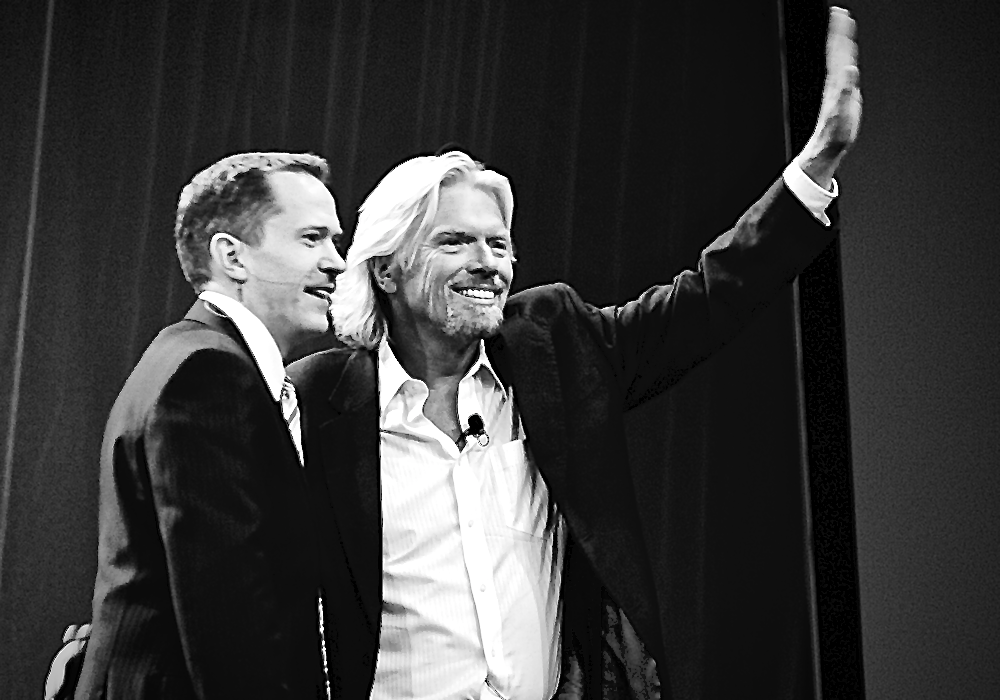
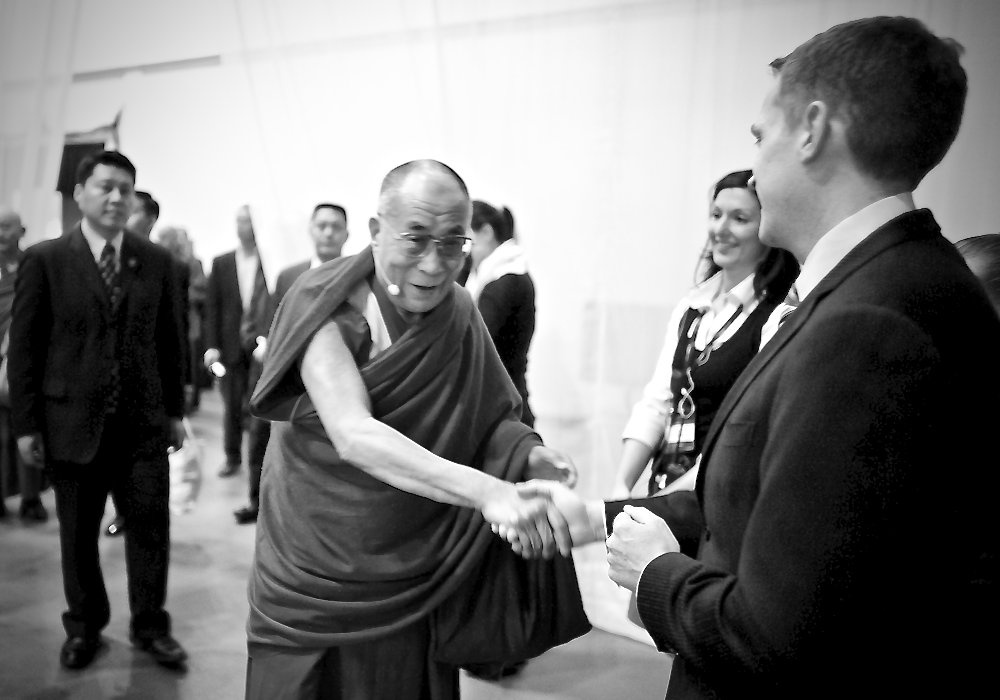
We'll be learning from some of the  world's most respected and amazing  teachers .. all coming together one  time only, never to be repeated.  Richard Branson, Dr. Stephen Covey .. and even a private address by His Holiness the Dalai Lama.

As my business partner and best friend Kourosh told me yesterday, challenging times help define a person's character.

It's not the things that happen to us that define us — it's the response we HAVE to those things that makes us who we really are.

Our mission with SimpleWealth is to help inspire and educate people on how to achieve what we call . . . Freedom Without Compromise.

By the way, if you're prepared to step up and RESPOND to what's going on in the world right now .. to grasp the opportunities that lay ahead .. and you want to be part of an incredible community that comes together to believe, to share and to prosper ..

Join us at Engage Today.

This is the most important event we've ever done, and I believe it can also be the turning point in YOUR life if you make the decision to come.

Your chance to be part of history goes away on Friday, September 18th.

The doors will close on this event, and you'll only be able to hear about it from those who attend.

What is your FREEDOM worth?

Freedom is a state of mind, and we're going to show how to achieve FREEDOM at Engage Today.

Coming to this event shouldn't be a 'want' for you.  It should be a 'need' … a 'MUST'.

This is the first step towards changing your future and achieving Freedom Without Compromise.

Reach out and grab the opportunity, and join us in creating the change that our world so desperately needs.

And please, take a couple of minutes today and be GRATEFUL for what you have, and how magical a world we live in. 

We owe it to those who were lost on September 11th, and we owe it to ourselves to never be willing to give up our freedoms without fighting for them. 

Doing WHATEVER IT TAKES to engage fully, to be free, and to reach our personal potential, which is a responsibility each of us has.


Will This Shift Enrich You .. Or Destroy You?

General 2 Comments »

There is an incredibly powerful shift occurring right now that most people can sense, but can't put their finger on it.

Does it feel to you like things have changed in the last year or two?

Many people are mistakenly thinking that the economic downturn is the cause of the shift .. but the truth is, the financial turbulence is only a SYMPTOM of the shift that's occuring right now.

And the important thing for you to get here is that if you can understand the shift and recognize it, and know what it leads to .. you can harness its power and capitalize on it.

However, if you fail to understand what's really going on, then you're standing in it's path, and you're going to get blindsided.

So, what is the shift that's occuring?

Going back in history several hundred years, there have been clear and repeating cycles that have occurred over and over.  In the book Generations by Strauss and Howe, the theory was put forth that there are clear trends that occur in our culture and society, driven primarily by the generational shifts that occur.

Approximately every 80 years (the average length of a human life), this super-cycle repeats itself.  You  can break it down into 2 specific and clear cycles, each lasting about 40 years in duration.

By the way, many of the thoughts and insights I've developed on this subject have also come from the work of Michael Drew, and his mentor, Roy H. Williams, who present a very powerful presentation called "The Pendulum Presentation" that summarizes this perspective very well.

Briefly, here are the 2 cycles, each 40 years in length, that repeat every 80 years or so:

1) The Individual Cycle
In this 40 year period, the movement is towards taking care of yourself, "looking out for #1", and what matters most is looking good and feeling good.  Traits such as greed and ambition are seen as neutral or positive, and people yearn to acquire, succeed and be recognized for their accomplishments.  What matters most and is valued is achievement, accomplishment, material wealth, courage, independence, breaking away from conformity, and looking out for yourself first.

2) The Community Cycle
In this second 40 year period, individuals begin to recognize and honour the importance of the community and of others, and there is a clear shift away from individual success towards community support and success.  Spikes occur in volunteerism and philanthropy, and people focus on 'the greater good' as opposed to trying to get ahead themselves.  In this cycle, what people value most is connection, transparency, authenticity, honesty, integrity, conforming for the greater good, and fairness.

By the way, these terms, Individual and Community, are the names I use to describe these 40 year cycles, even though in Generations, Strauss and Howe use terms such as 'Idealist' and 'Civic', and go into further discussion and detail on sub-categories as well.

When we shift from one cycle into the other, there are dramatic results that have profound impact on everyone — so knowing where we are, and when the shifts are occurring, it's critically important if you want to try and work with the shifts, rather than against them.

Now, to be clear, I don't think you can predict everything from looking at history.  For example, I don't agree with many of Harry Dent's projections, since I think he relies way too much on demographics, and fails to take into account a lot of other significant variables (which explains why he's been wrong on more of his predictions than he's been right, and why David Foote's book, "Boom, Bust and Echo" ended up largely fiction and didn't provide very accurate views into what would happen in the future based on the baby boomers). 

However, as Mark Twain said, "history may not repeat itself, but it usually rhymes."

So .. Where Are We?

Based on the studies, the last super-cycle (starting with the last Community Cycle), began in approximately 1923-1925.  It lasted for approximately 40 years, when in about 1963, the next Individual Cycle commenced.

And, if your math is good, you would then see that if the Individual Cycle started in 1963 or thereabouts, that would mean .. it ended in 2003, and we have just moved into the beginning of the next Community Cycle.

Look back and see what was happening in these periods of time, and let's determine if there's anything to these cycles. 

First, ask yourself, what was going on in the mid to late 1920's .. was there anything happening economically that might be compared to what's happening today?

Obviously, the parallels between then and now are interesting to consider, since that was the period leading into the Great Depression.  It took us 80 years to get back to the financial devastation and risk not seen since that period, and here we are.

Fast forward to the 1960's, and it's obvious there was a fundamental shift in society and culture, as the "groovy 60's" took shape and conformity was thrown aside.  The 60's kicked off the next Individual Cycle, leading to the push for individual freedom, non-conformity, and doing what you wanted because it felt good.

This led into the 70's, and the cycle was half-way complete in the mid-80's — which arguably was the height of the "me" generation, all about looking good and feeling good.  The hottest songs were titles such as "Material Girl" by Madonna, and one of the iconic movies of the 80's was Wall Street, in which Gordon Gecko declared, "Greed Is Good".  That was perhaps the slogan of the 80's, and by extension, the Individual Cycle.

As this cycle continued, it moved through the 90's and then past the year 2000, where it ended approximately 5-6 years ago.  Since then, we've been moving into the front of the next Community Cycle.

Now, I'm reducing down an incredible amount of information into a single blog post, but my purpose here is to help you recognize that we're going through a significant and systemic change in social and cultural psychology, and you MUST understand this going forward.

And here's the most important point I'm trying to make:

What this shift means is that going forward, people will demand honesty, integrity, authenticity and transparency.  People will crave to connect with others, and will choose quality of life over quantity of material goods or wealth.

People will rather listen to someone they know who isn't perfect but is honest, rather than "gurus" who talk a big game but never show enough of themselves for anyone to really know or trust.

And people will demand to know more about the people they deal with – connecting with people on an individual basis will become a significant factor in your ability to be successful.

One simple example is the explosion of social media in the last 3 years why is it that social media has become one of the single most powerful influences on the internet and in media today? 

Because technology has largely disconnected us, and social media serves that craving we all have to be connected and to resonate with others.

This means that regardless of what business you happen to be in, you need to determine how you can integrate these traits and values into your organization and into your relationships.

I'll do more posts on this subject in the future, particularly if you post comments and show that you're engaged by this topic.

Suffice to say, we're on the crest of a MASSIVE change, it it will be your choice whether you step on and ride it to success, or try to keep doing things the way you used to, and get swept away by this powerful and predictable wave.


The Huffington Post features Freedom Without Compromise!

General 1 Comment »

If you've been paying attention to my blog lately, you know that the phrase, "Freedom Without Compromise" is an important one to me.  I'm excited about the fact that the concept, and some of my work was featured today on the Huffington Post, the world's most popular blog.  You can see it here at the Huffington Post, in an article written by Gail Lynne Goodwin.

"Freedom Without Compromise" is the 'tagline' of SimpleWealth, my company, and reflects what I believe almost all of us are seeking – freedom, without having to compromise our values, ethics or integrity.

The Huffington article spoke in part about the article I posted a couple of days regarding "The Power of Choice", a concept that I think is tremendously important in the current context of all the turbulence and uncertainty in the economy.  The moment you take control and responsibility for your choices, you're able to then CHANGE the path of your destiny, and move towards what you want.

I would greatly appreciate it if you could read the article on the Huffington Post, and then please make a comment about it!  If we get lots of comments, the article will remain on the site longer and be able to help even more people who read it.

Thank you in advance, and I am humbled by the interest in some of the more recent work I've been doing – THANK YOU for reading my blog and supporting our ideas here at SimpleWealth!


Are You Using Your Power Or Throwing It Away?

General 8 Comments »

I recently wrote a short article for InspireMeToday.com and thought I'd share it here — not only because I think it's a great message, but I've been so busy with our upcoming event, Engage Today 2009, I haven't had a lot of writing time to update my blog!

As a quick personal update, this event is coming together quickly, and the people I'm blessed to be speaking to and working with is incredible. 

This week alone, I brainstormed with Nathan Rosenberg, the Chief Marketing Officer of Virgin Canada (Richard Branson's right-hand PR/marketing man for my great country), I did conference calls with Vishen Lakhiani of Mind Valley (a true genius) and Eben Pagan (one of the most forward-thinking business visionaries I know), spoke to the wild and crazy marketer Frank Kern, and caught up with several of the speakers and special guests that are coming to the event.

Life is crazy busy, but it has been fantastic.  My business partner Kourosh and I are going 100 miles an hour, but the adrenaline is surging through us and we can't wait to pull this momentous feat off!

Anyway, onto the point of the post.  I just wrote this article (it's not actually out yet) so I thought I'd share it with you, since I really believe that this power I speak of is the most potent we all have .. and sadly, the one that most people give away.

Enjoy.

The Greatest Power Within All Of Us

The greatest power that you hold is the power of choice, because every choice you make dictates every result you get in your life – good or bad.  And most importantly, every decision you make starts in your mind.

All of us start out with this incredible power, yet so many give it away by refusing to step up and be accountable for their decisions.  Sadly, most people choose to be a victim of circumstances and others, and never recognize that they are choosing that position.

Look at some of the most successful people in the world, or even those that are around you, and you’ll find one thing in common – those who are consistently successful and happy do not choose the role of victim.

Allowing yourself to take on that role robs you of your ability to change your circumstance.  As long as you feel that the problem or reason is “outside of you”, you instantly yield your personal power, and become the result of someone else’s choices.  The moment you decide it’s your responsibility, the world literally shifts for you.

I began practicing one of the most powerful habits I have a few years ago, every time I ran into a situation where something didn’t go the way I had hoped.  Instead of looking around for someone to blame, or some excuse to justify it, I would simply ask myself, “What role did I play in this?

While most of us would like to believe it’s “never our fault” when things go wrong, the fact is we almost always have some responsibility when things go wrong.  Whether it’s a business relationship, a marriage, or anything else, the willingness to accept your part is the difference between living in power, or living in regret.

When you’re honest with yourself, you’ll find a lot of situations where you did play a part .. and the moment you’re willing to accept it, that allows you to then learn from that experience.

You get to choose whether you play the victim, or the victor – and your understanding of the power of choice will dictate almost everything happens in your life!

You are making choices every minute of your life – what to think about next, how to feel, where to place your attention, and what you’re going to say.  The quality of your life is determined simply by the choices that you make along the way. 

 Want to change your life? 

Change the quality of your decisions, and embrace the incredible power you have to change your circumstances.

This may sound too simple to be true, but the fact remains that whether something that happens to you is good or bad is based on whether you choose to think of it as good or bad. 

Most of us have the experience that when something negative happens to us, later in time (with hindsight) we look back and recognize that what we perceived originally as negative .. turned out to be one of the greatest things that happened to us!

Don’t underestimate the gift you’ve been given to be able to make choices in your life.  It’s what makes each of us unique, and also gives every one of us the ability to make anything want of our life – all we have to do is truly choose to live a life of wonder, and the universe will set those things into motion to help you make it happen. 

“Whatever you can do or dream you can, begin it.
Boldness has genius, power and magic in it.”
     – Goethe


© 2009 Greg Habstritt. All rights reserved.